
Court trials often feel intimidating because the process is unfamiliar—not because it is incomprehensible. When broken down step by step, the structure of a trial follows a clear sequence designed to ensure fairness, order, and due process.
Understanding these stages makes the justice system more transparent and accessible.
1. Filing and Case Initiation
Every trial begins with a formal filing.
This may include:
- A complaint or charge
- Supporting documentation
- Initial court review
At this stage, the court determines whether the case meets legal requirements to proceed.
2. Preliminary Hearings and Motions
Before a trial officially starts, preliminary matters are addressed.
These steps may involve:
- Initial hearings
- Motions to dismiss or limit evidence
- Scheduling decisions
This phase helps clarify the scope of the case and prevents unnecessary delays later.
3. Discovery and Evidence Exchange
Discovery is the information-sharing stage.
Both sides:
- Exchange evidence
- Identify witnesses
- Review relevant documents
The goal is transparency—not surprise.
4. Jury Selection (If Applicable)
In jury trials, a jury is selected before testimony begins.
This process ensures:
- Impartiality
- Fair representation
- Conflict-free participation
Jurors are chosen to evaluate facts objectively.
5. Opening Statements
The trial formally begins with opening statements.
Each side outlines:
- Their version of events
- The evidence they will present
- What they intend to prove
No evidence is introduced yet—this sets expectations.
6. Presentation of Evidence and Testimony
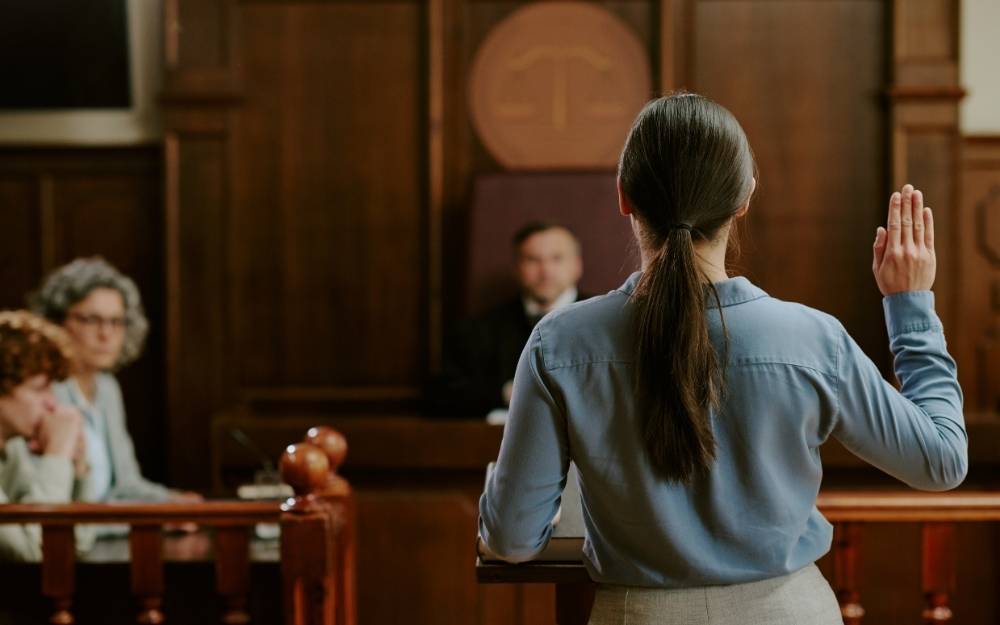
This is the core of the trial.
It includes:
- Witness testimony
- Expert opinions
- Physical or digital evidence
Each side may question and cross-examine witnesses.
7. Closing Arguments
Once evidence is presented, both sides summarize their case.
Closing arguments:
- Highlight key evidence
- Reinforce legal arguments
- Ask for a specific outcome
This is the final opportunity to persuade.
8. Jury Deliberation or Judicial Review
After closing arguments:
- The jury deliberates, or
- The judge reviews the case
This stage involves careful consideration of evidence and law.
9. Verdict or Judgment
The verdict is the formal decision.
It determines:
- Guilt or liability
- Responsibility
- Case outcome
This decision concludes the trial phase.
10. Sentencing or Remedies
If applicable, sentencing follows.
This may include:
- Penalties
- Damages
- Corrective actions
The focus shifts from determination to resolution.
11. Appeals and Post-Trial Motions
Trials do not always end with a verdict.
Post-trial options include:
- Appeals
- Motions for reconsideration
- Enforcement actions
These steps ensure legal correctness.
Why Understanding Trial Stages Matters
Clarity builds trust.
When people understand how trials work:
- Misconceptions decrease
- Transparency improves
- Confidence in the system grows
Knowledge removes unnecessary fear.
Final Thought
Court trials are structured for fairness, not complexity. Each stage serves a purpose in protecting rights and ensuring accountability. Understanding the process transforms the justice system from something intimidating into something intelligible.